


 English
 عربى
عربى
 Español


×
Password
Get password
Enter password to download relevant content.
Submit
 +86-15267462807
Overview:
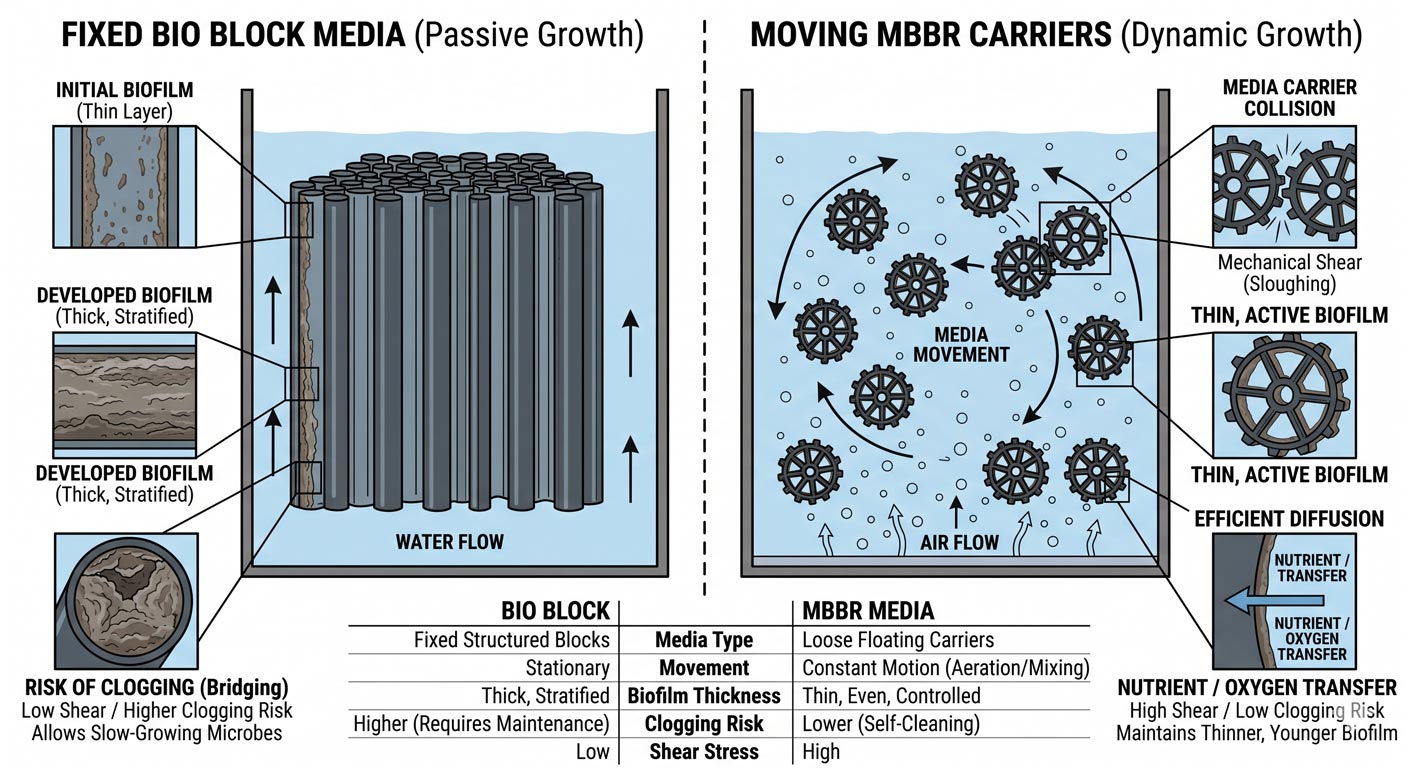
The choice between Bio Block and MBBR Media depends on the Organic Loading Rate (OLR) and Energy Budget. Bio Block (Structured Media) is a fixed, zero-energy solution ideal for low-to-medium strength wastewater and anaerobic stages. In contrast, MBBR Media (Moving Carriers) is a dynamic, self-cleaning format that maximizes BOD/COD removal in high-load industrial applications, though it requires constant energy for media agitation.
| Technical Metric | Bio Block (Fixed Grid) | MBBR Media (Moving Bed) | Strategic Selection Driver |
|---|---|---|---|
| Surface Area (SSA) | 100 - 250 m2/m3 | 500 - 1200+ m2/m3 | MBBR handles 3x higher organic loads. |
| Energy Consumption | Low (Oxygenation only) | High (Oxygen + Mixing) | Bio Block reduces OPEX in low-load tanks. |
| Clogging Resistance | Moderate (Prone to bridging) | Excellent (Self-cleaning) | MBBR is mandatory for high-solids influent. |
| Media Lifespan | 15+ Years (UV Stable) | 10-20 Years (Wear dependent) | Bio Blocks have zero mechanical attrition. |
| Infrastructure | Fixed Support Frames | Retention Screens + Blowers | Bio Block is easier to install in simple tanks. |
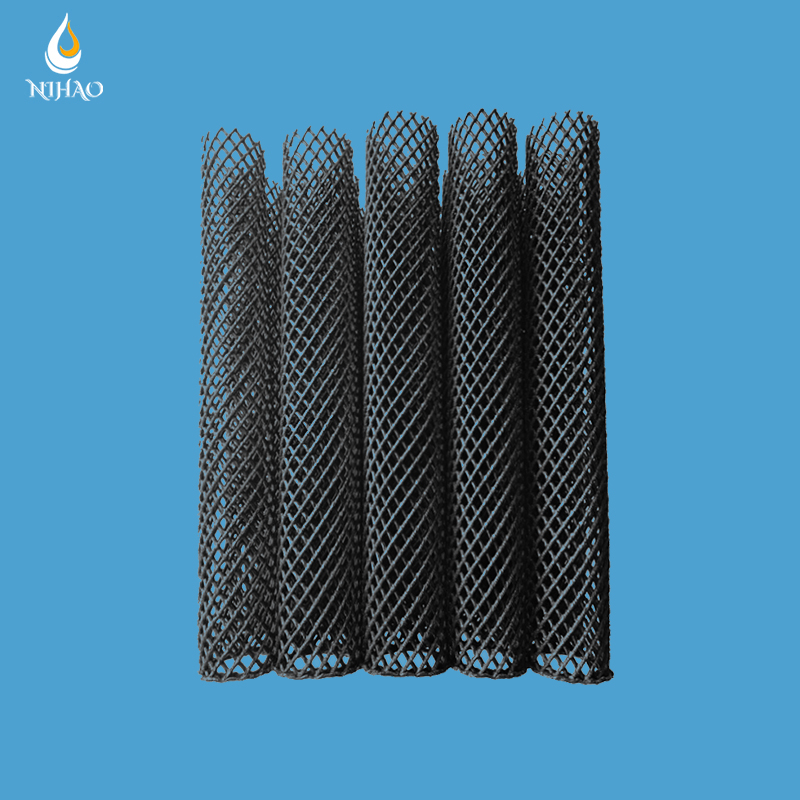
Bio Block is a fixed-film media format consisting of structured, net-like tubes or grids thermally welded into rigid blocks. Typically made of UV-resistant Polyethylene (HDPE), these blocks are stacked permanently inside the treatment tank.
The Bio-Mechanism:
Wastewater flows through the vertical or cross-flow channels. Because the blocks are stationary, they create a very stable environment for Slow-Growing Microbes, such as those involved in Nitrification or Anaerobic digestion.
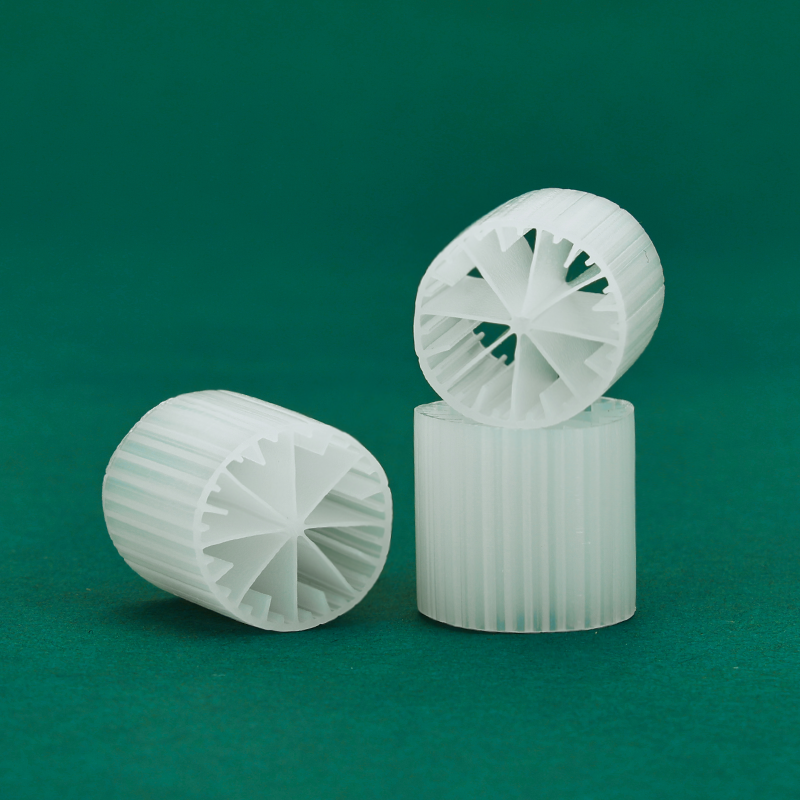
MBBR Media (Moving Bed Biofilm Reactor carriers) are small, high-density plastic pieces designed to stay in constant motion. They are typically shaped like wheels or porous cylinders to maximize the Protected Surface Area.
The Bio-Mechanism:
The media is kept in a continuous “tumble” by air diffusers or mechanical mixers. This constant movement serves a critical function: Mechanical Sloughing.
To move beyond a simple description, engineers use specific Digital Metrics to decide:
Terms:



86-15267462807


86-15267462807
