


 English
 عربى
عربى
 Español


×
Password
Get password
Enter password to download relevant content.
Submit
 +86-15267462807
In the world of biological wastewater treatment, Dissolved Oxygen (DO) is the lifeline of your system. It drives the metabolism of microorganisms and directly dictates the quality of your effluent. However, a common mistake we see in the industry is treating MBBR (Moving Bed Biofilm Reactor) and MBR (Membrane Bioreactor) with the same aeration logic used for conventional activated sludge.
The truth is, while both technologies are advanced, their relationship with oxygen is fundamentally different. Applying a “one-size-fits-all” DO set-point can lead to either skyrocketing energy costs or unstable biological performance.
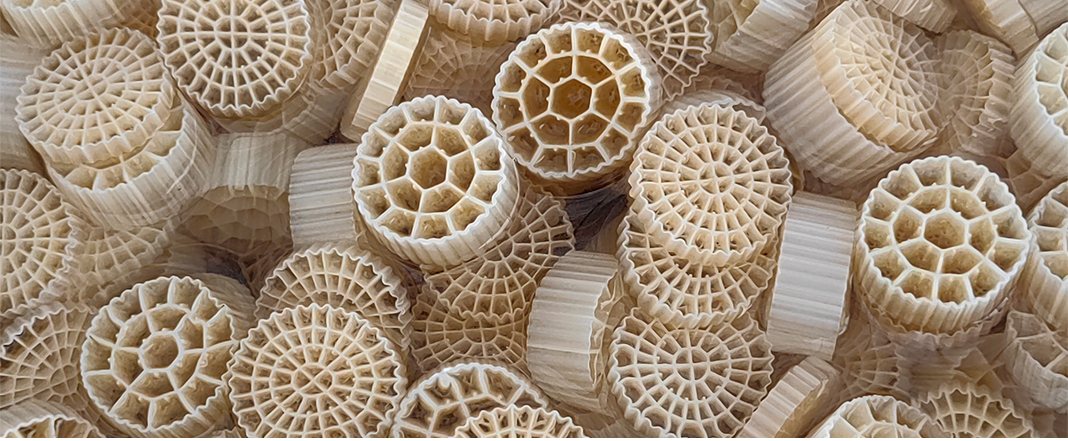
In an MBBR system, the bacteria are not floating freely; they are attached to the protected surface area of the HDPE carriers. This biofilm structure provides resilience, but it also creates a physical barrier for oxygen.
| Feature | MBBR System (Moving Bed Biofilm Reactor) | MBR System (Membrane Bioreactor) |
| Optimal DO Target | 3.0 – 4.0 mg/L | 1.5 – 2.5 mg/L (Process Tank)(Note: Membrane tank DO is often higher) |
| Primary Aeration Function | 1. Biological Respiration2. Media Fluidization (Mixing) | 1. Membrane Scouring (Cleaning)2. Biological Respiration |
| Key Challenge | Mass Transfer Limitation:Oxygen struggles to penetrate deep into the protected biofilm layers. | DO Carryover:High-oxygen water from scouring is recirculated, disrupting denitrification. |
| Critical Risk | Dead Zones:If mixing is poor, media piles up and becomes ineffective. | Energy Waste:Over-aeration for cleaning is the #1 cause of high OPEX. |
| Sensor Placement | In the down-flow zone of the rolling media to measure residual oxygen. | Mid-depth in a well-mixed zone, away from direct scouring bubbles. |
| Control Strategy | VFD Continuous Control:Ramp up/down based on real-time load. |
Intermittent/Cyclic Aeration:Pause scouring air periodically (e.g., 10s On / 10s Off). |
While MBBR struggles to get enough oxygen into the biofilm, Membrane Bioreactors (MBR) often face the exact opposite problem: having too much oxygen where it isn’t wanted.
Even with the best equipment, your DO readings are useless if the sensor is in the wrong spot. This is a frequent error we see in retrofitting projects.
Before looking at the monitor, an experienced engineer can often judge the DO status just by looking at the tank.
Symptoms of Low DO (<1.0 mg/L):
Dark/Black Sludge: Indicates anaerobic conditions and septic zones.
Unpleasant Odors: The smell of rotten eggs (H_2S) suggests the biology is suffocating.
Filamentous Bulking: Certain filamentous bacteria thrive in low DO, causing sludge that won’t settle (in hybrid systems).
Symptoms of High DO (>5.0 mg/L):
Pin-point Floc: The sludge particles become tiny and dispersed, leading to turbid effluent (cloudy water).
Excessive Foam: White, billowing foam often accumulates on the surface during startup or over-aeration periods.
Energy Bill Spikes: The most obvious symptom—your blower energy consumption is disproportionately high compared to the COD load.
To solve these issues permanently, the industry is moving away from manual valve adjustments.
Dissolved Oxygen is not just a simple parameter; it is the pulse of your biological process.
Successful treatment requires recognizing the distinct needs of your technology: focusing on Penetration and Fluidization for MBBR, and managing Scouring and Recirculation for MBR.
Is your plant suffering from high energy costs or unstable nitrogen removal?
It might be time to audit your aeration strategy. Contact our engineering team today for a professional assessment and discover how smart DO control can transform your wastewater operations.
Q1: Why is my MBBR system failing to remove Ammonia (Nitrification) even though DO is at 2.0 mg/L?
A: In an MBBR system, 2.0 mg/L is often insufficient. Unlike suspended sludge, the bacteria in MBBR are hidden deep inside the biofilm carrier. You need a higher driving pressure—typically 3.0 to 4.0 mg/L—to push oxygen through the outer layers and reach the nitrifying bacteria inside. If your DO is too low, the inner biofilm becomes anaerobic and nitrification stops.
Q2: My MBR effluent has high Total Nitrogen (TN). Could DO be the problem?
A: Surprisingly, yes—too much DO could be the culprit. If your membrane scouring air is too aggressive, the DO in the membrane tank can spike to 6-7 mg/L. When this oxygen-rich liquid is recirculated back to the Anoxic Tank (for denitrification), it “poisons” the anoxic environment. The bacteria consume the free oxygen instead of Nitrate, causing TN removal to fail. You may need to optimize your recirculation ratio or install a de-oxygenation tank.
Q3: How often should I calibrate my DO sensors?
A: It depends on the technology.
Q4: Can lowering DO levels help with sludge bulking?
A: Usually, it’s the opposite. Low DO (Filamentous Bulking) is a common cause of poor settling sludge in hybrid systems. Some filamentous bacteria thrive in low-oxygen environments and outcompete the floc-forming bacteria. Maintaining a stable DO set-point (avoiding dips below 1.5 mg/L) is crucial to preventing bulking.
Q5: Is it worth upgrading to VFD blowers for DO control?
A: Absolutely. Aeration typically accounts for 50-70% of a wastewater plant’s total energy bill. By switching from a fixed-speed blower to a VFD blower controlled by a real-time DO sensor, you can match air supply to biological demand. Most plants see an ROI (Return on Investment) within 12-18 months purely from electricity savings.



86-15267462807


86-15267462807
