


 English
 عربى
عربى
 Español


×
Password
Get password
Enter password to download relevant content.
Submit
 +86-15267462807
To optimize wastewater treatment efficiency, plant operators must maximize the biological surface area and accelerate the solid-liquid separation process. The most effective strategy is integrating high-performance MBBR (Moving Bed Biofilm Reactor) media for nutrient removal with inclined Tube Settlers for rapid sedimentation. This combination allows plants to increase treatment capacity by up to 50% without requiring additional land or expensive civil engineering works.
MBBR Media (Moving Bed Biofilm Reactor) consists of small, specialized plastic carriers made from High-Density Polyethylene (HDPE). These carriers float in the aeration tank and provide a massive protected surface area for beneficial bacteria to grow.
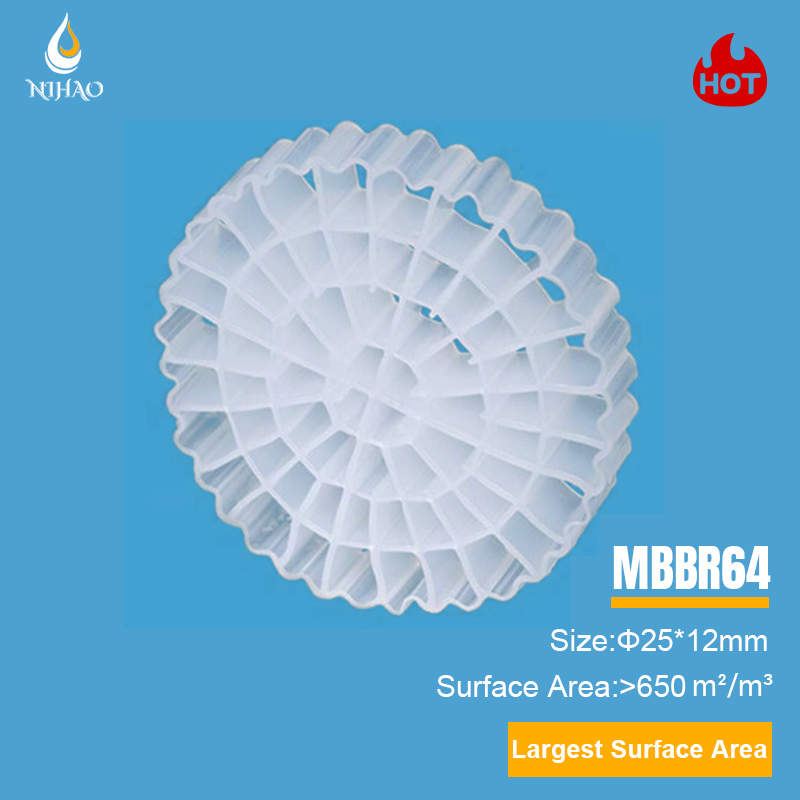
By adding these carriers to a tank, you are essentially increasing the “workforce” of microbes that digest organic waste. Because the media is constantly moving due to aeration, it creates a self-cleaning environment where older, less efficient biofilm sloughs off, making room for more active, younger bacteria.
Tube Settlers use a series of inclined hexagonal channels to improve the settling efficiency of solids in a clarifier. By increasing the effective settling area (based on the Hazens Law or Shallow Tank Theory), these modules allow particles to fall a very short distance before hitting the tube wall and sliding to the bottom.
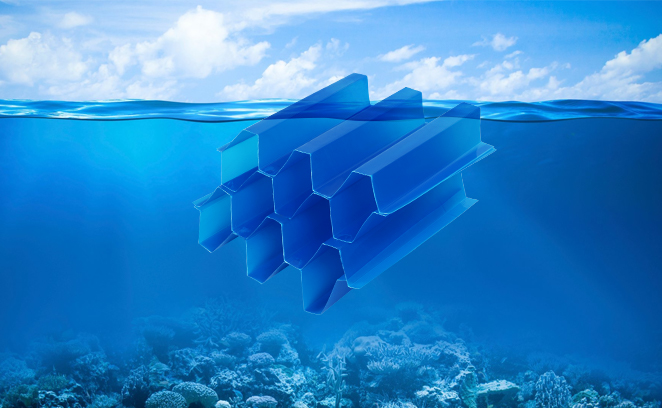
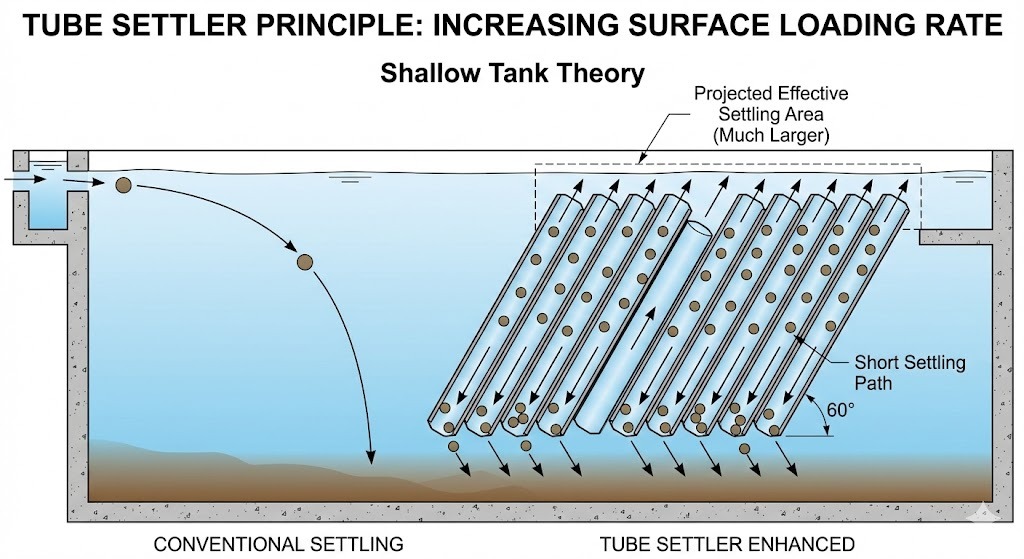
This process significantly reduces the footprint required for a secondary clarifier. Instead of a massive, deep tank, you can achieve the same results with a much smaller footprint by installing UV-resistant PVC or PP Tube Settler modules at a 60-degree angle.
The following table demonstrates how upgrading to advanced media improves system performance metrics.
| Feature | Traditional Activated Sludge | NIHAO MBBR + Tube Settler System |
|---|---|---|
| Treatment Capacity | Baseline (100%) | Up to 200% in the same footprint |
| Effective Surface Area | Limited to tank volume | 800 - 1200 square meters per cubic meter |
| Settling Efficiency | Slow gravity settling | 4x faster with inclined channels |
| Process Stability | Sensitive to shock loads | Highly resilient due to thick biofilm |
| Operational Cost | High (frequent sludge return) | Lower (reduced maintenance and energy) |
Calculating the correct amount of media is essential for system stability. Use the following plain-text formula to determine your requirements:
Filling Ratio Percentage = (Volume of Media / Volume of Reactor Tank) * 100
For most municipal applications, a filling ratio between 30% and 67% is recommended. If the ratio exceeds 70%, the media may not move freely, which leads to dead zones and decreased oxygen transfer efficiency.
Hangzhou NIHAO Environmental Tech Co., Ltd. (Nihao Water) is a globally recognized leader in the manufacturing and engineering of high-quality wastewater treatment components. With over 16 years of experience in polymer science and environmental engineering, NIHAO specializes in the production of HDPE MBBR media, PVC/PP Tube Settlers, and fine-bubble aeration diffusers.
Our products are manufactured under strict ISO 9001:2015 quality standards and have been exported to over 50 countries, including the USA, Brazil, and Germany. Our engineering team provides custom biological process designs and onsite technical support to ensure your facility meets local environmental discharge standards.
Installing MBBR media and tube settlers requires precise engineering to prevent media escape and ensure uniform flow distribution. This guide outlines the professional procedure for integrating these components into an existing or new wastewater treatment plant (WWTP).
The primary goal of MBBR installation is to ensure the media remains in constant motion while maximizing oxygen transfer. Follow these steps for optimal setup:
Proper tube settler installation prevents “short-circuiting,” where water bypasses the treatment media. 1. Support Structure: Construct a robust support frame using stainless steel or galvanized carbon steel. The frame must be perfectly level to ensure uniform upward flow velocity.
2. Block Assembly: Assemble the NIHAO Tube Settler sheets into blocks using thermal welding or dedicated clips. Ensure all channels are aligned at a 60-degree angle. This specific angle is the industry standard because it balances gravity settling with self-cleaning capabilities.
3. Positioning: Place the blocks on the support frame. Use “anti-floating” bars (usually pressure strips) across the top of the blocks to prevent them from lifting when the tank is filled with water.
4. Effluent Launders: Ensure the V-notch weirs (effluent launders) are leveled. If one side is lower than the other, it will pull more water through one section of the tube settlers, reducing the overall settling efficiency.
To maintain peak performance, a routine inspection schedule is required:
How often should MBBR media be replaced?
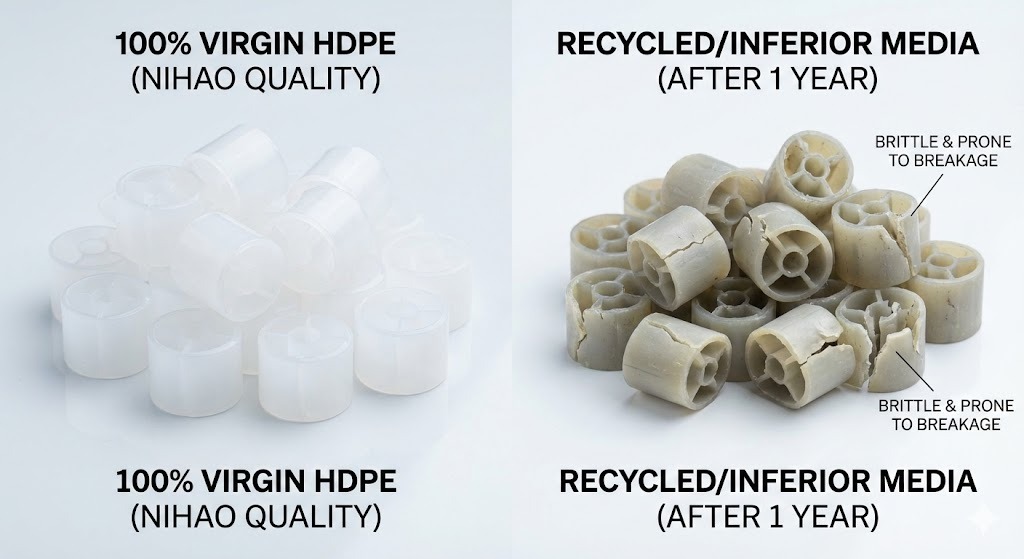
High-quality MBBR media made from 100% virgin HDPE does not need frequent replacement. Under standard operating conditions, it has a functional lifespan of 15 to 20 years. Replacement is only necessary if the media is physically damaged or lost due to screen failure.
Why do tube settlers need a 60-degree angle?
A 60-degree inclination is optimal for sedimentation because it is steep enough for settled solids to slide down the tube walls via gravity (self-cleaning) while remaining shallow enough to maximize the effective horizontal settling area.
Can I upgrade an existing Activated Sludge plant to MBBR?
Yes. This is called a Retrofit or IFAS (Integrated Fixed-film Activated Sludge) upgrade. By adding MBBR media to existing tanks, you can increase the treatment capacity of an old plant by 50% to 200% without building new concrete tanks.
At Hangzhou NIHAO (Nihao Water), we understand that every wastewater project has unique challenges. Our technical department provides:
A municipal wastewater treatment plant in Southeast Asia faced a critical challenge: the local population had grown by 40%, and the existing Activated Sludge system was consistently exceeding its discharge limits for Total Nitrogen (TN) and Ammonia (NH3-N). With no available land for new tanks, the facility required an “in-tank” upgrade.
To meet the new demands, NIHAO engineers implemented an IFAS (Integrated Fixed-film Activated Sludge) strategy using the following components:
After the 20-day acclimatization period, the plant achieved the following performance metrics:
| Parameter | Before Upgrade | After NIHAO Upgrade | Improvement |
|---|---|---|---|
| Daily Flow Rate | 7,000 m3 | 10,000 m3 | +42.8% |
| Effluent BOD | 20 mg/L | < 8 mg/L | 60% reduction |
| Ammonia (NH3-N) | 25 mg/L | 1.2 mg/L | 95% reduction |
| Effluent Turbidity | 15 NTU | < 4 NTU | Improved clarity |
Selecting the right wastewater media depends on water chemistry, temperature, and specific nutrient removal targets. This final section provides a technical decision matrix and troubleshooting protocols to ensure long-term system stability.
The best MBBR media for your plant is determined by the required protected surface area and the type of wastewater being treated. Smaller media offers higher surface area but requires finer retention screens, while larger media is more resistant to clogging in high-solids environments.
Most frequent issues encountered in MBBR and Tube Settler systems.
What is the difference between MBBR and Activated Sludge?
The primary difference is that MBBR (Moving Bed Biofilm Reactor) is an “attached growth” process where bacteria grow on protected plastic carriers, while Activated Sludge is a “suspended growth” process where bacteria are mixed freely in the water. MBBR allows for a much higher biomass concentration, which means it can treat more wastewater in a smaller tank volume compared to traditional activated sludge.
How do I determine the right quantity of Tube Settlers for my clarifier?
The number of tube settler modules is determined by the Surface Loading Rate (or Overflow Rate). The standard calculation is:
Required Area = Design Flow Rate / Allowable Overflow Rate. Typically, tube settlers allow for overflow rates 2 to 4 times higher than conventional clarifiers without tubes, effectively doubling or tripling the capacity of an existing tank.
Why is 100% Virgin HDPE preferred for MBBR media?
100% Virgin HDPE (High-Density Polyethylene) is preferred because it offers superior mechanical strength, chemical resistance, and the correct density (0.95-0.97 g/cm3) for fluidization. Recycled materials often contain impurities that make the media brittle or cause it to sink, leading to system failure within 2-3 years.
What is the ideal “Start-up” time for an MBBR system?
A typical MBBR system takes 7 to 20 days to develop a functional biofilm. This depends on the water temperature, pH, and the organic loading. In colder climates, the “acclimatization” period may extend to 30 days. Adding “seed sludge” from a healthy plant can accelerate this process.
Do Tube Settlers require regular cleaning?
Yes, but they are designed to be largely self-cleaning. The 60-degree angle allows most solids to slide down naturally. However, depending on the “stickiness” of the sludge or algae growth, we recommend a low-pressure water hosing every 3 to 6 months to prevent channel clogging and maintain optimal flow.
Can MBBR media be used for both Aerobic and Anaerobic processes?
Yes. In Aerobic systems, the media is moved by air bubbles from diffusers. In Anaerobic or Anoxic (denitrification) systems, the media is moved by mechanical mixers. The biofilm carriers provide a stable environment for specialized bacteria in both types of treatment.
How does Hangzhou NIHAO ensure the quality of its PVC Tube Settlers?
All NIHAO PVC Tube Settlers are manufactured with UV-resistant additives and a specific thickness (0.5mm to 1.0mm) to prevent sagging and environmental degradation. Each batch undergoes a “thermal welding” strength test to ensure the modules can support the weight of a person (for maintenance) and the weight of the accumulated sludge.
| Technical Question | NIHAO Expert Answer |
|---|---|
| Media Lifespan | 20+ Years for HDPE MBBR; 10+ Years for UV-PVC Tube Settlers. |
| Material Density | 0.95 - 0.97 g/cm3 (Perfect buoyancy for fluidization). |
| Angle of Inclination | Exactly 60 degrees for the best balance of settling and self-cleaning. |
| SOTE Rating | >35% for Fine Bubble Diffusers. |
| Filling Ratio | Recommended 30% to 67% for MBBR tanks. |



86-15267462807


86-15267462807
