


 English
 عربى
عربى
 Español


×
Password
Get password
Enter password to download relevant content.
Submit
 +86-15267462807
The global textile industry faces relentless scrutiny over its environmental footprint, particularly regarding the vast quantities of high-colored, chemically complex wastewater generated during dyeing and finishing operations. With tightening regulations enforced by the US EPA and state-level authorities, textile mills can no longer rely on traditional primary and secondary treatment methods alone. Transitioning from basic end-of-pipe color removal to closed-loop water reuse and Zero Liquid Discharge (ZLD) requires a multi-stage approach combining advanced chemical oxidation, optimized biological systems, membrane filtration, and efficient sludge dewatering. Integrating high-performance biological media, settling, aeration, and dewatering equipment from engineering-focused manufacturers such as Hangzhou NIHAO Environmental Tech Co., Ltd. (Nihaowater) allows operators to strengthen the biological and mechanical stages of the treatment train while driving down per-ton treatment costs.
Dye molecules utilized in modern textile operations, including reactive, azo, and acid dyes, are engineered for chemical stability, making them inherently resistant to natural photo-degradation and conventional biological treatment. Advanced Oxidation Processes (AOPs) break down these refractory compounds by generating highly reactive hydroxyl radicals (.OH) capable of non-selectively cleaving the chromophoric conjugated double bonds responsible for color.
Mainstream AOP mechanisms involve distinct chemical and operational trade-offs:
| Process | Mechanism | Trade-off |
|---|---|---|
| Fenton Oxidation | Hydrogen peroxide plus ferrous iron catalyst at low pH (2.8-3.5): Fe2+ + H2O2 to Fe3+ + .OH + OH- | Decolorization above 90 percent, but produces substantial iron-rich chemical sludge requiring dedicated dewatering |
| Ozonation | Ozone gas directly attacks chromophores or decomposes at alkaline pH into hydroxyl radicals | No chemical sludge, but 8-15 kWh per kg of O3 generated raises OPEX |
| Solar Photocatalysis | TiO2 semiconductor catalyst activated by UV/visible light splits water into hydroxyl radicals | Low utility cost, but scaling slurry-phase reactors requires catalyst recovery to prevent nanomaterial loss |
In post-AOP clarification stages where heavy chemical flocs form, physical settling efficiency is paramount. Structured tube settler media, such as Nihao Tube Settler Media, increases effective settling surface area per square meter inside clarifier tanks, speeding solid-liquid separation and delivering clearer supernatant to downstream units while keeping tank footprint to a minimum.
Following chemical oxidation or raw effluent balancing, biological treatment serves as the cost-effective backbone for removing Biochemical Oxygen Demand (BOD), Chemical Oxygen Demand (COD), and remaining bio-degradable dye fragments. Conventional Activated Sludge (CAS) processes often struggle with the hydraulic surges and toxic dye shocks typical of batch dyeing. Modern textile plants overcome these limitations by upgrading to Moving Bed Biofilm Reactor (MBBR) systems.
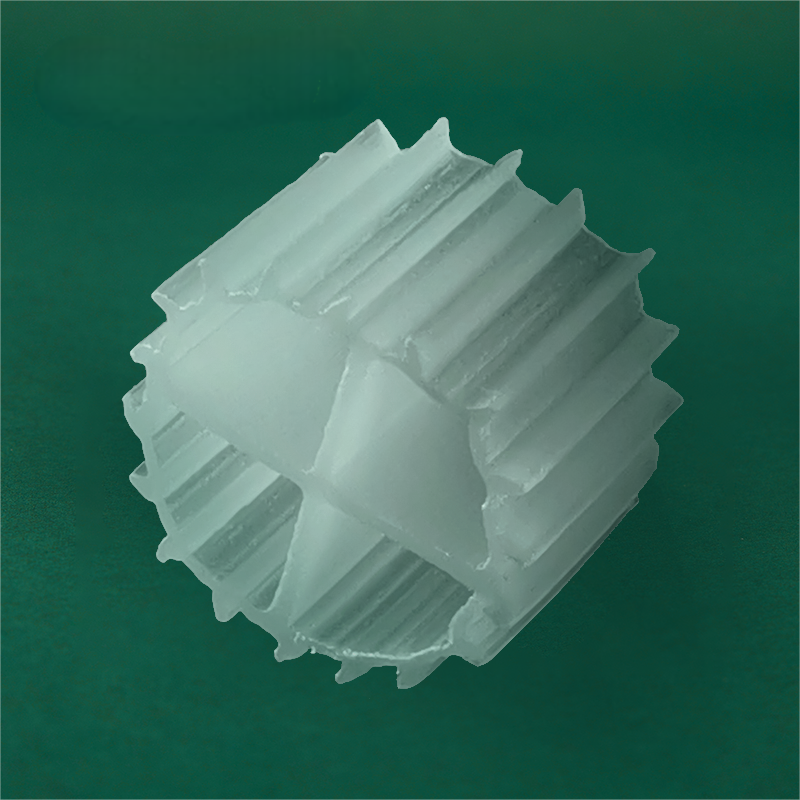
Integrated MBBR configurations use suspended plastic carriers to foster dense, specialized biofilm communities capable of acclimating to complex aromatic rings. High-surface-area carriers such as Nihao MBBR Bio Filter Media (100 percent virgin HDPE) or structured Nihao Bio Block Media allow facilities to increase volumetric biomass concentration significantly without expanding physical tank footprints. This attached-growth setup resists shock loads, reduces biomass washout, and improves biological COD/BOD removal efficiency.
To support aerobic biodegradation, dissolved oxygen transfer must be maintained with minimal energy consumption. Nihao Fine Bubble Disc/Tube Diffusers help maintain uniform oxygen distribution and Oxygen Transfer Efficiency (OTE) across deep aeration basins, and submersible mixers keep MBBR carriers in gentle, even suspension without excessive media wear.
In tandem with biological stages, low-cost adsorbents derived from agricultural residues, such as raw or chemically modified rice husk, sugarcane bagasse, and fly ash, act as economical pretreatment barriers. These materials adsorb heavy metals and hydrophobic dyes via surface complexation and electrostatic attraction, reducing color load prior to biological tanks.
Textile mills must also manage the resulting mixed biological and chemical sludge, which is a primary operational hurdle. Traditional filter presses are labor-intensive and prone to clogging when handling greasy, fibrous textile sludge. An automated multi-plate screw press, such as the Nihao Volute Sludge Dewatering Machine, provides continuous, clog-resistant dewatering with low power consumption and minimal wash-water usage, turning wet sludge into manageable, high-solids cake ready for disposal.
To move beyond discharge compliance toward high-value process water recycling, pressure-driven membrane separation provides precise molecular sieving downstream of biological treatment. Achieving water quality suitable for sensitive dyeing operations, such as pastel shade dyeing, requires strict control over several parameters:
| Water Quality Parameter | Raw Textile Effluent | Target Reused Process Water |
|---|---|---|
| Turbidity (NTU) | 20 - 150 | Less than 0.5 |
| Color (Pt-Co Units) | 200 - 1,500 | Less than 5 |
| Total Dissolved Solids (TDS, mg/L) | 2,500 - 8,000 | Less than 500 |
| Total Hardness (as CaCO3, mg/L) | 150 - 600 | Less than 25 |
| Conductivity (uS/cm) | 3,000 - 12,000 | Less than 1,000 |
A multi-stage membrane cascade ensures system longevity and consistent permeate quality:
A common industry concern is that recycled water with variable residual salinity might alter dye uptake kinetics, causing batch-to-batch color variation, sometimes called shade un-reproducibility. A well-specified NF/RO train, properly sized and maintained, can hold permeate conductivity and residual color within tight tolerances, allowing textile mills to safely recycle roughly 75-85 percent of their process water back into high-temperature dye vessels without risking fabric spot-staining or shade shifting. Note: NF, RO, and UF membrane elements are supplied by specialized membrane manufacturers; equipment selection for this stage should be confirmed directly with a qualified membrane systems vendor.
For textile facilities operating under stringent regulations, such as California's Title 22 reuse standards or regional EPA Effluent Limitations Guidelines (ELG) prohibiting direct surface water discharge, Zero Liquid Discharge (ZLD) provides the ultimate compliance strategy. A typical ZLD architecture integrates membrane brine concentration with thermal recovery systems:
Primary Effluent -> Biological/MBBR -> UF Pretreatment -> Primary RO -> High-Pressure Brine RO / EDR -> Mechanical Vapor Recompression (MVR) Evaporator -> Crystallizer -> Dry Salt Solids + 95-98% Water Recovery
The main barrier to ZLD adoption has historically been capital investment and thermal energy costs. Thermal evaporation of raw RO concentrate can cost between $15.00 and $25.00 per cubic meter of water treated due to steam and electrical power consumption. Incorporating a high-rejection brine concentration membrane stage ahead of thermal evaporation can raise overall membrane system recovery from roughly 75 percent up to 90-92 percent. Pre-concentrating the brine reduces the liquid volume sent to thermal MVR evaporators by over 50 percent, driving total operational costs down toward an economical benchmark of $3.50 to $6.50 per cubic meter ($13.25 to $24.60 per 1,000 gallons). This brine concentration equipment is a specialized membrane system separate from the biological and mechanical equipment discussed above, and should be sourced from a qualified high-pressure membrane systems supplier.
Balancing regulatory compliance, water scarcity risk, and operational profit margins requires reliable engineering and field-proven hardware at every stage of the treatment train. Hangzhou NIHAO Environmental Tech Co., Ltd. (Nihaowater) manufactures the biological, clarification, aeration, and dewatering components that make up the backbone of the process, including MBBR bio-media, bio block media, tube settler media, fine bubble diffusers, submersible mixers, and multi-plate screw press dewatering machines, backed by over 16 years of manufacturing experience.
Whether you are upgrading the biological stage of an existing discharge system in the Carolinas or building a new treatment line feeding into a membrane-based water reuse or ZLD facility in California, Nihaowater's equipment is built to support US EPA-compliant treatment trains. Contact their application engineering team to request product specifications, discuss a pilot trial, or size MBBR, clarification, or dewatering equipment for your facility.
What are the most cost-effective advanced oxidation processes for removing color from textile wastewater?
Fenton oxidation remains the most cost-effective AOP in terms of initial capital cost for high-color batch discharge, though it generates chemical sludge. Ozonation provides low-sludge operation but carries higher electricity costs. Solar photocatalysis is extremely cost-effective in sunny regions when coupled with efficient catalyst recovery systems, though commercial adoption is still scaling compared to Fenton and ozone systems.
How does MBBR technology enhance biological color and COD removal in textile effluent?
Moving Bed Biofilm Reactor (MBBR) technology uses high-surface-area plastic carriers, such as Nihao MBBR Bio Filter Media, suspended in aeration tanks. Specialized microorganisms attach to these carriers, creating a dense biofilm that resists hydraulic shocks, retains slow-growing dye-degrading bacteria, and can meaningfully boost COD/BOD removal capacity without requiring larger tank footprints.
Can treated textile wastewater be safely reused in sensitive dyeing processes without affecting color quality?
Yes, provided the treatment train includes ultrafiltration followed by reverse osmosis or nanofiltration. This combination can reduce turbidity to below 0.5 NTU, remove residual color, and control hardness and total dissolved solids (TDS), supporting shade reproducibility across sensitive dyeing batches. The membrane stage itself should be specified with a qualified NF/RO/UF membrane supplier.
What are the best equipment options for managing sticky textile treatment sludge?
Textile sludge containing chemical flocs, bio-sludge, and synthetic fibers quickly clogs traditional belt presses or plate-and-frame filter presses. Automated multi-plate screw presses, like the Nihao Volute Sludge Dewatering Machine, feature self-cleaning mechanisms that handle oily and greasy sludge continuously with minimal water consumption and low power draw.
How can textile mills achieve Zero Liquid Discharge (ZLD) while remaining economically viable?
The key to economical ZLD is maximizing low-cost membrane brine concentration before thermal evaporator stages. By using high-rejection, high-pressure RO membrane systems to recover up to 90-92 percent of the water mechanically, the final liquid volume sent to energy-intensive Mechanical Vapor Recompression (MVR) evaporators is minimized, significantly lowering per-ton operational expenses.
What role do UF and MBR membranes play in extending reverse osmosis membrane lifespan?
Ultrafiltration (UF) and membrane bioreactor (MBR) stages act as physical barriers that strip out suspended solids, colloidal silica, macro-proteins, and bacteria. Delivering a low Silt Density Index (SDI15 below 3) to downstream RO membranes prevents surface bio-fouling and colloidal cake formation, extending RO element lifespan and reducing chemical cleaning cycles.
References: US EPA Effluent Limitations Guidelines for the textile industry; California Title 22 Water Recycling Criteria.
Hangzhou NIHAO Environmental Tech Co., Ltd. | #2808, Baiyue Center, Linping, Hangzhou, Zhejiang, China 310000


86-15267462807


86-15267462807
