English
 عربى
 Español
One side of an aeration tank produces a dense curtain of bubbles while another barely bubbles at all. The first suspicion is often a faulty diffuser, but uneven air distribution can start anywhere between the blower and the basin floor. Header losses, partially closed valves, water trapped in piping, membrane fouling, installation depth and tank geometry all affect the result. A reliable diagnosis separates air-supply problems from oxygen-transfer and mixing problems before equipment is replaced.
Why Uneven Bubble Distribution Is More Than a Visual Problem
In an activated-sludge basin, diffused air serves two purposes: transferring oxygen to microorganisms and supporting circulation of the mixed liquor. Uneven aeration can create regions with insufficient dissolved oxygen (DO), stagnant solids or inconsistent biological conditions. These problems can affect carbon removal and nitrification even when the tank's average DO reading appears acceptable.
However, a dense bubble plume does not prove that an area is receiving the correct oxygen dose. Bubble size, wastewater characteristics, tank depth and local oxygen demand affect the relationship between visible bubbles and actual oxygen transfer. Conversely, a quiet area may have lower oxygen demand or be part of an intentional aeration-control zone. Diagnosis should combine visual observations with measured airflow, DO profiles and operating data.
Record whether the imbalance is constant, intermittent, limited to one air branch or spread across the entire basin. This distinction determines where to investigate first.
Recognize the Bubble Pattern Before Changing Settings
| What Operators See | Likely Investigation Area | First Check |
|---|---|---|
| All diffusers become weaker | Blower output or main air supply | Airflow, pressure, filter and blower alarms |
| One branch is consistently weaker | Air balancing or restricted branch | Branch valve, airflow and pressure loss |
| A few units on one branch have no bubbles | Individual diffuser or lateral problem | Membrane fouling, water intrusion or blockage |
| One unit produces unusually coarse bubbles | Possible membrane rupture or connection leak | Inspect that diffuser and nearby fittings |
| Weak bubbles appear after air shutdown | Condensate or wastewater intrusion | Drain points, check valves and restart procedure |
| Bubbles look uniform but DO varies widely | Oxygen demand or liquid mixing | DO mapping, loading and circulation |
Photograph the surface at a consistent blower setting and note the operating time. A simple marked tank plan with weak and strong zones can reveal whether the pattern follows the piping network, water depth or internal baffles.
Check the Blower and Total Air Supply First
If the entire basin has lost aeration intensity, inspecting individual diffusers first is inefficient. Compare current blower discharge pressure, airflow and motor load against the normal operating record. Also review blower speed, inlet-filter restriction, control-valve positions and alarms.
Blower pressure alone is not a measure of useful air delivery. A high discharge pressure with reduced airflow may indicate increased system resistance; low delivery can also result from blower control or equipment faults. In a multi-basin plant, a change to one tank's control valve can redistribute air throughout the network.
Check that the blower can supply the required flow at the actual operating pressure, including submergence, piping losses and diffuser resistance. Verify instruments where readings disagree; an inaccurate flowmeter or pressure transmitter can send troubleshooting in the wrong direction.
Why Air Headers and Branch Piping Create Uneven Distribution
Air follows a network of resistances. Different branch lengths, pipe diameters, fittings, valves and water accumulation can cause some laterals to receive less air than others. A branch nearer the blower is not automatically the best supplied, but an unbalanced system often displays a repeatable near-to-far or branch-to-branch pattern.
Partially Closed or Poorly Balanced Valves
A valve left partially closed after maintenance can restrict an entire diffuser bank. Check actual valve positions and branch airflow rather than relying only on actuator indicators. Air balancing should follow the system design and be performed with pressure and flow measurements; randomly throttling valves may raise blower energy use or deprive another zone.
Condensate and Water Intrusion
Condensation can collect at low points in an air header. Water may also enter the piping during shutdown if backflow protection fails. Either condition can obstruct sections of the distribution grid or create unstable flow on restart. Inspect designated drains, purge points and check valves according to plant procedures.
Leaks and Restrictions
Damaged connections may divert air before it reaches the membranes. Rust, debris, internal deposits or incorrectly sized fittings can add pressure loss. Compare pressures at accessible branch points and look for unusual noise or excessive bubbling at a single joint.
Blocked, Damaged or Aging Diffuser Membranes
Fine-bubble diffusers can lose performance as deposits build on the water side or contaminants reach the air side. Biological fouling, mineral scaling, particulate blockage and changes in membrane elasticity can increase resistance or alter bubble release. One badly fouled group may receive less air even when the header pressure is normal.
Membrane damage produces a different symptom. A tear or failed connection can release a concentrated stream of coarse bubbles and allow air to escape through the path of least resistance. That one bright plume may coexist with weak aeration elsewhere.
Dynamic wet pressure (DWP) helps describe resistance across an operating submerged diffuser, but total blower discharge pressure includes static water head and piping losses as well. Compare measurements at equivalent airflow and submergence, with the appropriate corrections, before attributing a pressure rise to the membrane. Sudden changes may reflect a failed component; gradual increases may suggest fouling or aging.
Cleaning May Be Appropriate
Biological deposits or removable scaling are present, the membrane is mechanically sound, and pressure loss improves after an approved cleaning procedure.
Replacement May Be Appropriate
The membrane is torn, hardened, deformed or no longer performs acceptably after cleaning, or the diffuser model does not match the required duty.
Cleaning agents and methods must be compatible with the diffuser material and the manufacturer's procedure. Do not assume a chemical suitable for one EPDM, silicone or coated membrane is safe for every membrane.
Installation Height and Water Depth Can Shift Airflow
Submerged diffusers must overcome the hydrostatic pressure at their installation depth. If one section of the grid sits lower than another, it requires more pressure before bubbles can be released. This can affect which diffuser group opens first, especially near the low-airflow end of its operating range.
Uneven supports, settled piping, tilted modules or changes made during a retrofit can therefore produce an imbalance even with new membranes. Check diffuser elevations, lateral support spacing and installation tolerances. A layout should not be corrected merely by supplying more air if the underlying issue is a misaligned grid.
Diffuser Layout and Tank Hydraulics Can Leave Dead Zones
Not every apparent aeration dead zone is caused by a blocked air line. A diffuser grid concentrated in the center may leave weak circulation at walls or corners; baffles, tank shape and inlet jets can also change how mixed liquor moves. Fine bubbles create upward motion, but complete tank circulation depends on the layout and operating conditions.
Check whether solids settle in the same locations, whether DO varies across the basin and whether the problem follows a change in water level, influent loading or aeration control. In an MBBR reactor, poor circulation may also appear as carriers accumulating in corners or near screens.
Importantly, adequate average DO does not prove adequate mixing. A tank can satisfy a sensor's DO setpoint while leaving poorly circulated regions elsewhere. Confirm both oxygen delivery and solids suspension before changing the grid design.
A Step-by-Step Procedure for Diagnosing Uneven Aeration
Document the Pattern
Mark weak, strong and coarse-bubble zones on a tank plan. Record blower mode, process loading and whether the pattern changes during the day.
Map Dissolved Oxygen
Check calibrated DO readings at multiple representative positions and depths. Compare them with loading, mixing and control setpoints.
Verify Total Air Delivery
Review blower airflow, discharge pressure, motor load, inlet restriction and control settings against historical baselines.
Compare Air Branches
Measure or verify branch airflow, valves and accessible pressures. Check for restrictions, leaks and trapped condensate.
Assess Diffuser Condition
Compare corrected diffuser resistance and inspect suspected membranes for deposits, rupture, aging or blocked slits.
Check Installation and Hydraulics
Review grid level, diffuser spacing, water depth, supports, baffles and bulk liquid circulation.
Correct One Cause and Retest
After a controlled adjustment, repeat the airflow, DO and visual checks. Avoid changing multiple variables simultaneously.
Air Balancing, Cleaning or Replacement: What Should You Do?
| Verified Root Cause | Likely Corrective Action | How to Confirm Success |
|---|---|---|
| Branch airflow imbalance | Rebalance valves and controls within design limits | Measured branch flow and stable DO profile |
| Condensate or backflow | Drain or purge safely; correct low-point or check-valve issue | Stable flow after restart |
| Removable membrane fouling | Clean using an approved method | Lower corrected pressure loss and restored bubble pattern |
| Torn or aged membrane | Replace compatible membrane or diffuser assembly | Normal bubble release and airflow |
| Uneven diffuser elevation | Level and support the grid correctly | More consistent activation at design air rates |
| Insufficient grid coverage | Review layout, mixing and diffuser quantity | Improved DO distribution and solids suspension |
| Insufficient blower capability | Check demand, pressure losses and blower selection | Required air delivery at operating pressure |
Changing from disc to tube diffusers, or replacing EPDM with silicone or a coated membrane, is not automatically the right first response. Material and geometry should be chosen for wastewater compatibility, fouling exposure, operating airflow and maintenance conditions—not solely because one area looks weak.
When Is a Full Aeration-System Retrofit Justified?
Cleaning or rebalancing is often sufficient when the underlying equipment is sound. A retrofit becomes more relevant when the grid is badly corroded, repeated fouling or failures disrupt operation, minimum and maximum airflow are outside diffuser limits, or the plant's biological loading has substantially changed.
Review oxygen demand, peak and minimum airflow, operating pressure, oxygen-transfer performance, mixing requirements, diffuser spacing, membrane material, air distribution and access for future maintenance. A low-pressure-drop diffuser will not deliver the expected benefit if the pipe network is undersized or the blower operates inefficiently against excessive throttling.
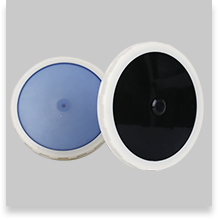
NIHAO's disc and tube diffuser ranges provide options for different grid layouts and membrane requirements, but final selection should be based on the actual basin duty and compatible equipment specifications.
Uneven Bubbles Across Your Aeration Tank?
For a technical review, share tank dimensions and water depth, current diffuser type and quantity, blower airflow and pressure, branch piping layout, recent DO readings, operating history and photographs or videos of the bubble pattern. This information helps distinguish airflow restrictions, diffuser problems and mixing limitations before a replacement or retrofit decision.
Request an Aeration System Review · Send Your Tank Layout · Compare Diffuser Options
Frequently Asked Questions
Why does one side of my aeration tank have more bubbles?
Possible causes include unbalanced air branches, valve settings, piping resistance, water trapped in a lateral, different diffuser submergence or fouled membranes. Compare branch airflow before replacing equipment.
Do fewer visible bubbles always mean lower oxygen transfer?
No. Bubble appearance alone cannot quantify oxygen transfer. Check airflow, DO at representative points and the biological oxygen demand of each zone.
Can blocked diffusers increase blower pressure?
Yes, fouling can increase system resistance. However, blower pressure also reflects water depth and piping losses, so it should not be interpreted as diffuser pressure drop without correction.
Why does aeration become uneven after a shutdown?
Condensate, wastewater backflow, stuck valves or an altered blower restart sequence can disturb distribution. Inspect the designated purge and backflow-prevention components.
Should I clean or replace aging diffuser membranes?
Clean mechanically sound membranes when fouling is removable and the procedure is approved. Replace membranes that are torn, hardened, permanently deformed or unable to meet operating requirements after cleaning.
Can DO be normal while the tank still has dead zones?
Yes. A single sensor or average reading may miss stagnant regions. Use DO mapping together with observations of circulation and solids suspension.
Will increasing blower airflow solve uneven distribution?
Not necessarily. More total air can increase energy consumption without fixing a restricted branch, leaking connection or poorly arranged diffuser grid. Identify the limiting condition first.