


 English
 عربى
عربى
 Español


×
Password
Get password
Enter password to download relevant content.
Submit
 +86-15267462807
RAS (Return Activated Sludge) is used to maintain the required biomass concentration in the biological reactor, ensuring stable treatment performance.
WAS (Waste Activated Sludge) is used to control sludge age (SRT) and total sludge mass, preventing sludge accumulation and system imbalance.
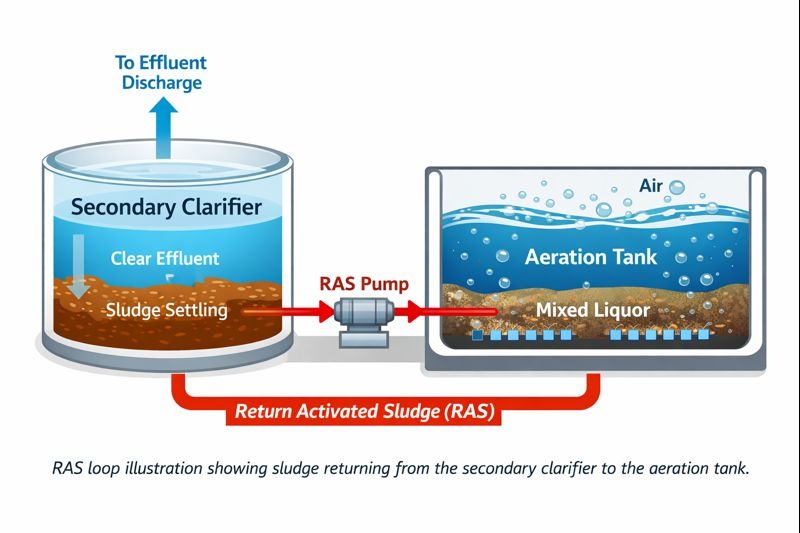
RAS (Return Activated Sludge) is the process of returning settled activated sludge from the secondary clarifier back to the biological reactor.
Activated sludge systems rely on microorganisms to degrade pollutants. Without RAS, sludge is lost through the clarifier, biomass decreases, and treatment efficiency drops over time.
WAS (Waste Activated Sludge) refers to the controlled removal of excess sludge from the system to keep the total sludge mass stable.
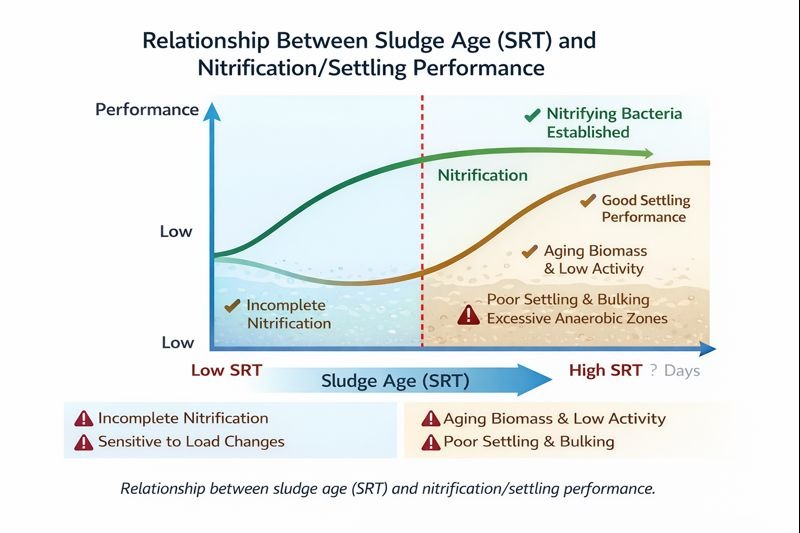
Sludge age (SRT) is the average time biomass stays in the system. It determines:
If SRT is too high, issues include:
If SRT is too low, issues include:
RAS maintains “biomass quantity”, while WAS controls “biomass quality and balance.”
| Control Target | RAS Function | WAS Function |
|---|---|---|
| MLSS (biomass concentration) | Maintains or increases | Reduces or stabilizes |
| SRT (sludge age) | Not directly controlled | Primary control variable |
| Biomass quantity | Increases or maintains | Decreases or balances |
| System stability | Provides base support | Prevents imbalance |
Many operators think that returning sludge alone is enough. In reality:
RAS and WAS must work together as a “balance system” to maintain stable biological treatment.
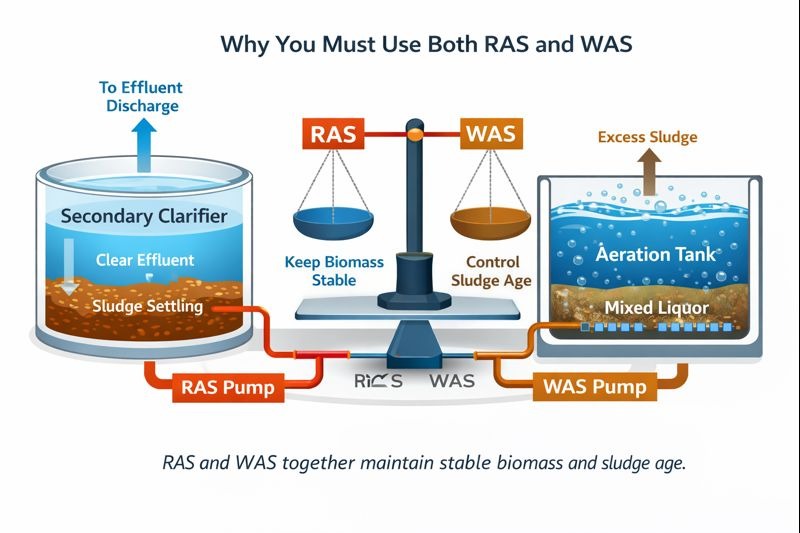
RAS returns settled sludge to the biological tank to maintain biomass and treatment capacity. WAS removes excess sludge to control sludge age (SRT) and prevent sludge accumulation. Together, RAS and WAS keep the activated sludge system stable and efficient.



86-15267462807


86-15267462807
